+8613776545860


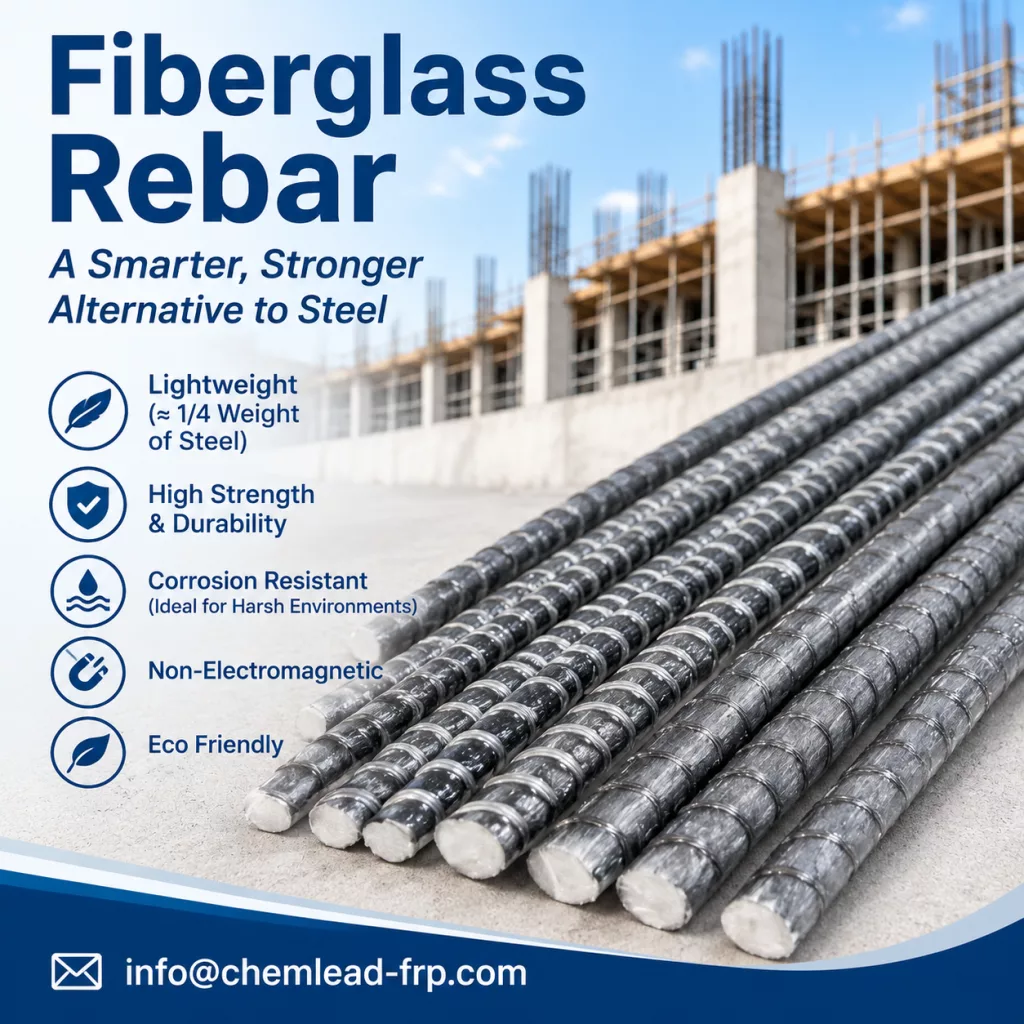
Build Stronger, Build Longer: Why Contractors Are Switching to Fiberglass (GFRP) Rebar
For decades, black steel has been the default choice for reinforcing concrete. While steel provides necessary tensile strength, it carries a major vulnerability: corrosion. When moisture, chlorides, or de-icing salts penetrate concrete, steel rusts and expands—causing cracking, spalling, and costly structural failures long before a project reaches its intended lifespan.
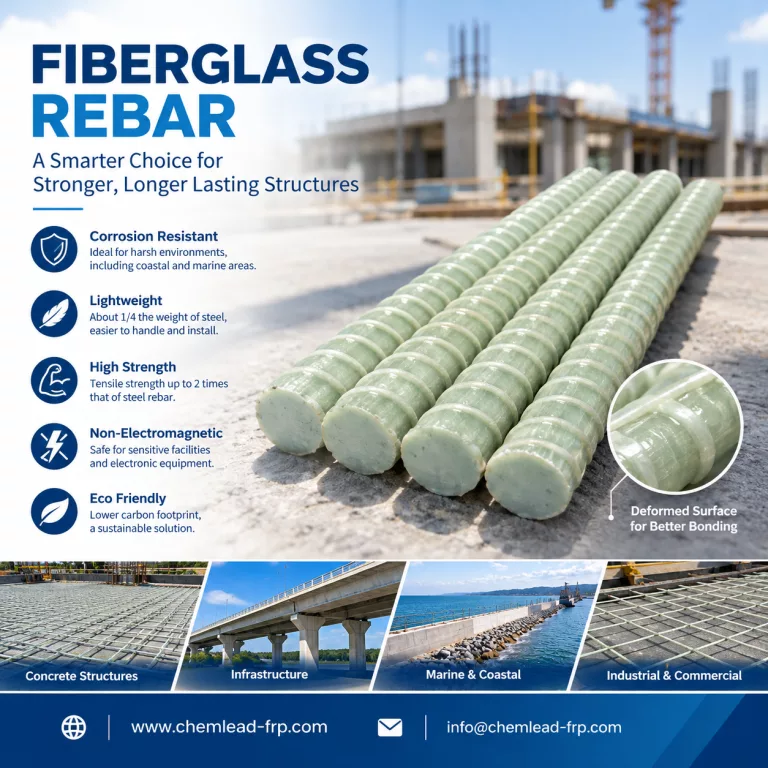
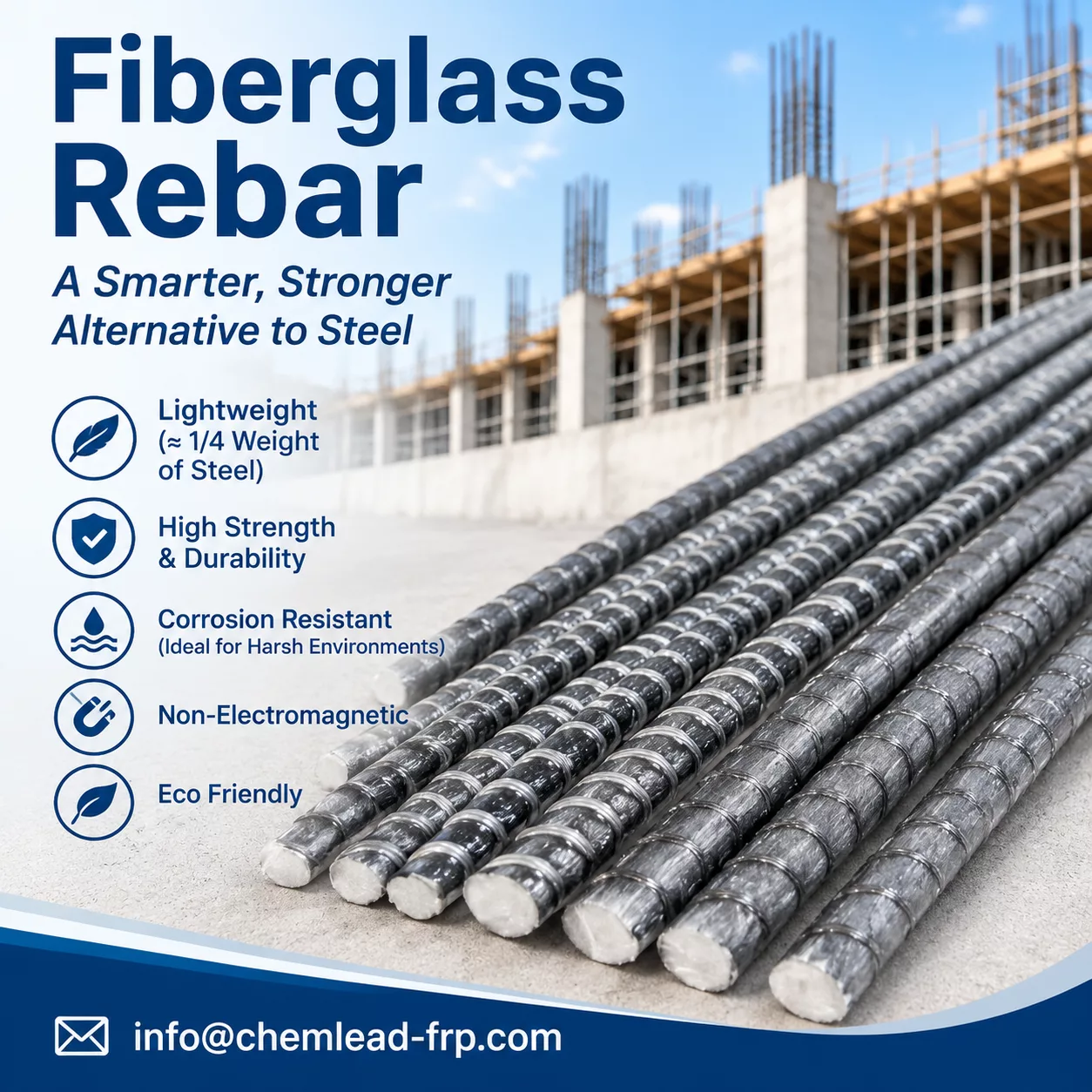
Today, engineers, contractors, and project owners are solving this problem at the source by switching to Fiberglass (GFRP) Rebar (Glass Fiber Reinforced Polymer). Manufactured from high-strength continuous glass fibers embedded in a durable polymer resin, GFRP rebar delivers superior performance without the lifecycle liabilities of traditional steel.
4 Key Advantages of Fiberglass (GFRP) Rebar
1. Zero Corrosion — No Rust, Spalling, or Concrete Degradation
Unlike steel, GFRP rebar is completely impervious to chloride ions, saltwater, chemicals, and moisture. Because it never rusts, it never expands inside the concrete matrix. Structures reinforced with GFRP eliminate rust-induced spalling, drastically reducing long-term maintenance and repair expenses.
2. 4x Lighter Than Steel for Faster Installs and Lower Freight Costs
GFRP rebar weighs roughly one-quarter as much as equivalent-strength steel rebar. On the job site, this translates directly to your bottom line:
-
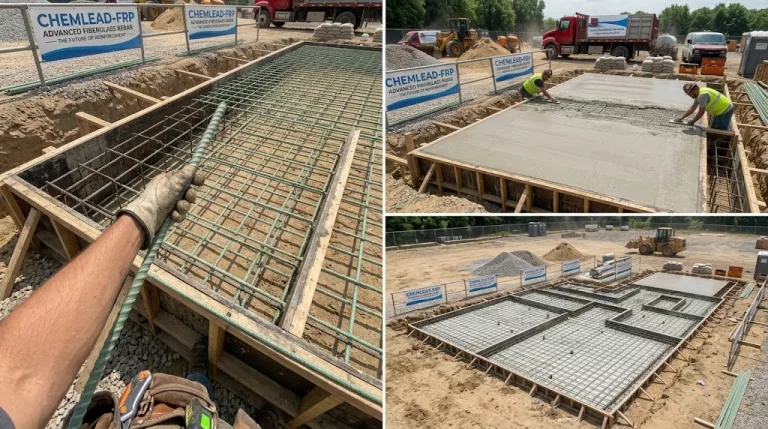
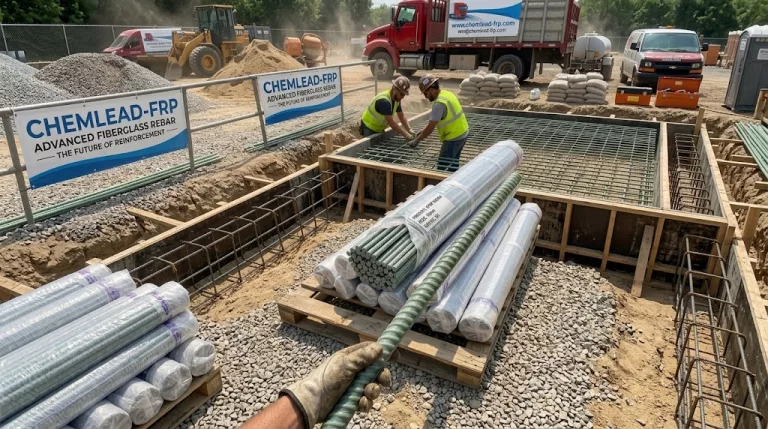
Faster handling: Crews can carry and place multiple bars at once without heavy lifting equipment.
-
Reduced labor fatigue: Fewer injuries and faster pour schedules keep projects on track.
-
Lower shipping costs: Maximize truckload capacity and cut freight expenses from the factory to your site.
3. Higher Tensile Strength for Heavy-Duty Performance
Engineered for demanding structural loads, GFRP rebar boasts a tensile strength roughly twice that of standard Grade 60 steel. Combined with strong bond-to-concrete surface deformations (such as sand-coated or ribbed profiles), it provides reliable, heavy-duty reinforcement across commercial and civil applications.
4. Non-Conductive and Transparent to Magnetic Fields
Because fiberglass and polymer resin do not conduct electricity or interfere with electromagnetic frequencies, GFRP rebar is essential for sensitive environments where steel causes interference or safety hazards.
Ideal Applications for GFRP Rebar
Thanks to its durability and non-corrosive profile, GFRP rebar outperforms steel in harsh and specialized environments:
| Application | Why GFRP Rebar Excels |
| Seawalls & Marine Structures | Impervious to constant saltwater exposure, tidal zones, and marine splash. |
| Bridge Decks & Barrier Walls | Resists road de-icing salts and heavy freeze-thaw cycles without spalling. |
| Foundations & Basements | Prevents moisture-driven corrosion in high-water-table soils. |
| Industrial & Chemical Slabs | Withstands harsh chemical washdowns, wastewater treatment, and agricultural waste. |
| MRI Rooms, Data Centers & Substations | Non-magnetic and electrically non-conductive—zero signal or current interference. |
Why Buy Manufacturer-Direct?
Sourcing your GFRP rebar directly from the manufacturer ensures consistent quality control, full compliance with industry standards (such as ASTM D7957 and ACI 440), and custom lengths or bent shapes tailored to your blueprints. Cutting out middlemen also gives you competitive factory-direct pricing and reliable lead times so your pour schedule never stalls.
Ready to Cut Long-Term Maintenance Costs?
Stop paying for premature concrete repairs caused by rusting steel. Upgrade your next build with high-strength, corrosion-free reinforcement engineered to last for generations.
Contact our engineering and sales team today for manufacturer-direct quotes, technical data sheets, and project specifications.