+8613776545860


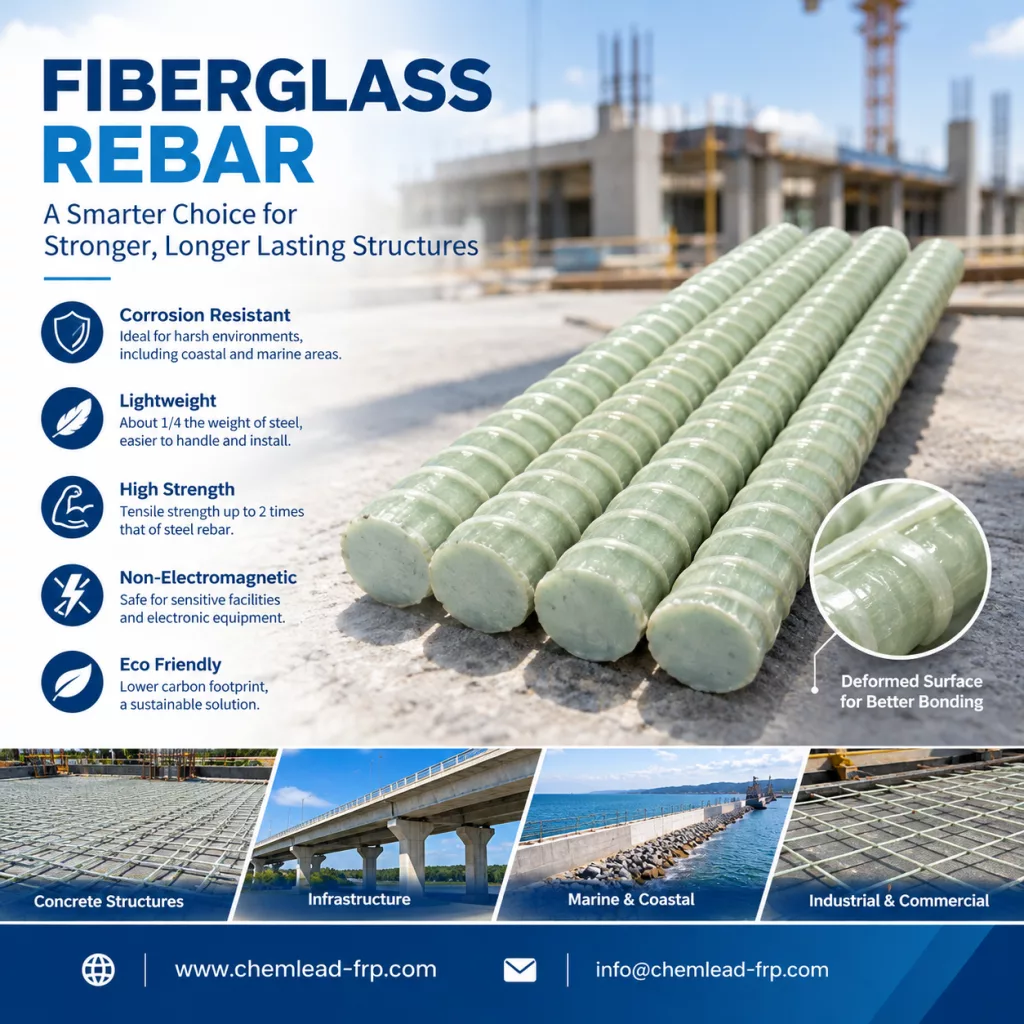
In civil engineering and heavy infrastructure, structural longevity is increasingly dictated by how effectively reinforcement materials resist environmental exposure. Traditional black steel rebar has long been the industry standard, yet it remains vulnerable to chloride-induced corrosion—leading to spalling, micro-cracking, and costly ongoing rehabilitation.
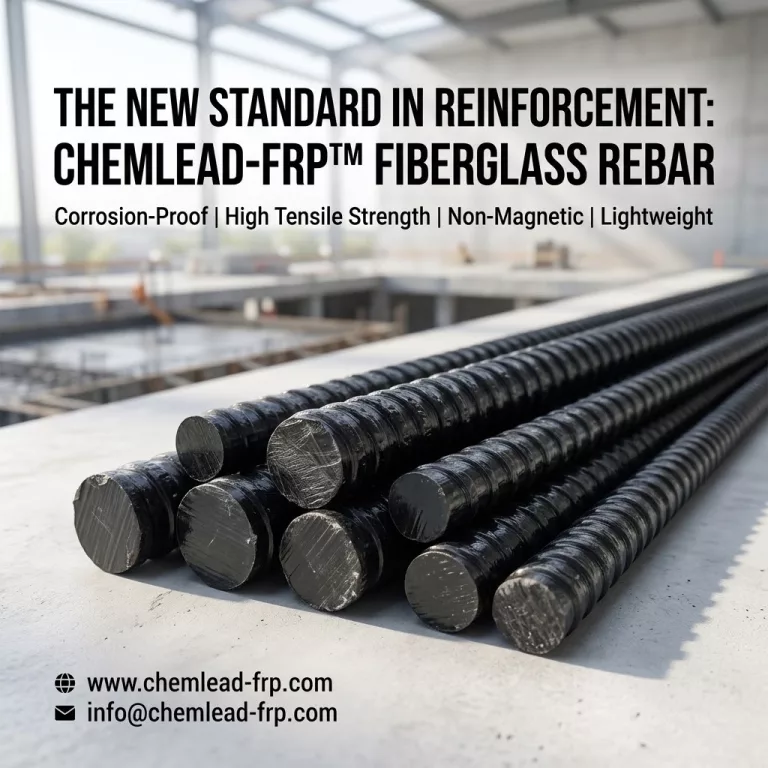
Glass Fiber Reinforced Polymer (GFRP) Rebar by Chemlead New Material Co., Ltd. delivers an engineered alternative designed to eliminate internal concrete degradation. Manufactured via a continuous pultrusion process that fuses high-strength glass filaments with premium vinyl ester resin systems, Chemlead GFRP rebar combines 100% corrosion resistance with a superior strength-to-weight ratio.
Technical Performance Profile
Evaluating structural reinforcement materials across mechanical, physical, and environmental parameters highlights key operational differences between carbon steel and GFRP composites:
-
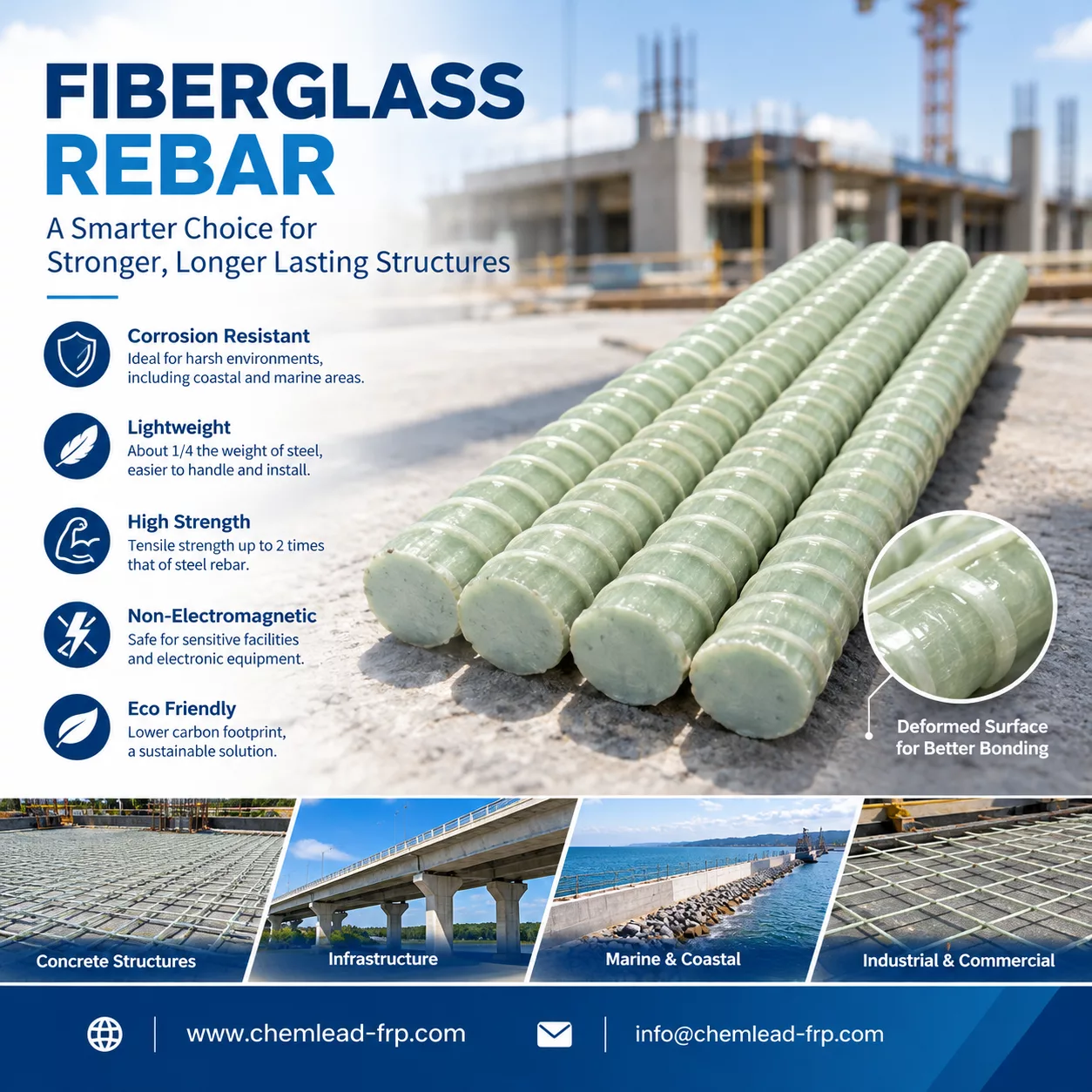
Corrosion Resistance: Traditional steel oxidizes rapidly when exposed to chlorides, salts, and chemical agent ingress. Chemlead GFRP composite rebar contains zero metallic content, making it 100% immune to rust, saltwater spray, and chemical degradation.
-
Tensile Strength: Standard Grade 60 steel rebar offers a yield strength of 400 to 500 MPa. In contrast, GFRP composite rebar achieves tensile strengths exceeding 1,000 MPa, delivering more than double the tensile load capacity.
-
Material Density: Carbon steel weighs approximately 7,850 kg/m³. GFRP composite rebar operates at a density of roughly 1,900 kg/m³—making it 75% lighter (one-fourth the weight of steel).
-
Electromagnetic Properties: Steel is magnetically active and electrically conductive. GFRP rebar is completely non-conductive, non-magnetic, and anti-static, preventing electrical arcs and RF field interference.
-
Design Lifespan: Traditional steel reinforced concrete often demands extensive maintenance or repairs within 15 to 25 years. GFRP-reinforced concrete provides a maintenance-free design life exceeding 100 years.
Strategic Deployment Sectors
1. Marine & Coastal Infrastructure
Port facilities, seawalls, breakwaters, jetties, and piers operate in high-salinity splash zones. GFRP reinforcement resists continuous chloride exposure, preserving structural integrity without needing expensive cathodic protection systems or sacrificial concrete cover thickness.
2. Transportation & Highway Engineering
Bridge decks, retaining walls, highway slabs, and barrier walls are subjected to seasonal deicing salts and freeze-thaw stress. Utilizing GFRP rebar prevents spalling, eliminates traffic closures for deck restoration, and reduces long-term municipal maintenance overhead.
3. Wastewater & Industrial Containment
Acid containment basins, wastewater treatment vaults, chemical storage facilities, and agricultural silos present aggressive chemical environments. GFRP composite rebar resists acid and alkali attacks, preventing structural breakdown under chemical exposure.
4. Electromagnetic Sensitivity Facilities
Hospitals with high-field MRI suites, power substations, automated tolling gantries, airport radar towers, and data centers require electromagnetic neutrality. Non-conductive GFRP rebar ensures full structural support without distorting sensitive electromagnetic fields or conducting unwanted electrical currents.
On-Site Logistics and Economic Benefits
Transitioning to GFRP rebar optimizes both field operations and project economics:
-
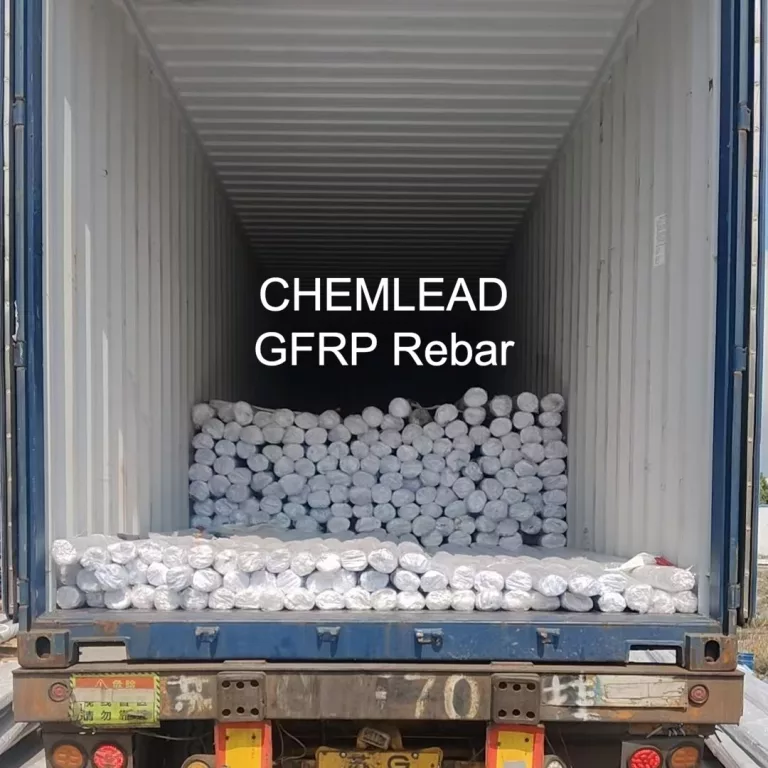
Lower Freight Expenses: Shipping 75% lighter material lowers transport costs per linear meter, allowing maximum volume allocation per trailer load.
-
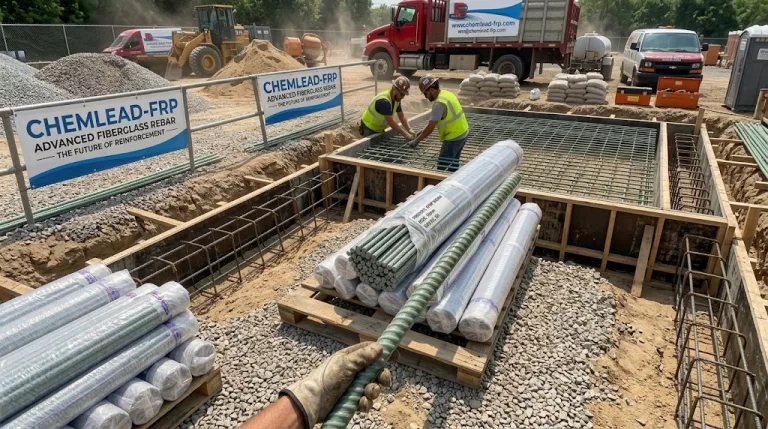
Accelerated Placement Speed: Site crews can carry, position, and tie lightweight GFRP bars manually, reducing crane utilization, heavy lifting risks, and overall labor hours.
-
Optimized Total Cost of Ownership (TCO): Although initial composite material unit costs differ from basic carbon steel, removing waterproofing sealers, epoxy coatings, and recurring repair cycles yields substantial net savings across the asset’s lifecycle.
Quality Manufacturing with Chemlead
As an established manufacturer of fiberglass reinforced polymer products, Chemlead New Material Co., Ltd. delivers certified, factory-direct composite solutions tailored to international structural standards.
-
🌐 Website: www.chemlead-frp.com
-
✉️ Inquiries & Specification Support: info@chemlead-frp.com
-
📍 Manufacturing & Head Office: Nanjing, Jiangsu Province, China