+8613776545860


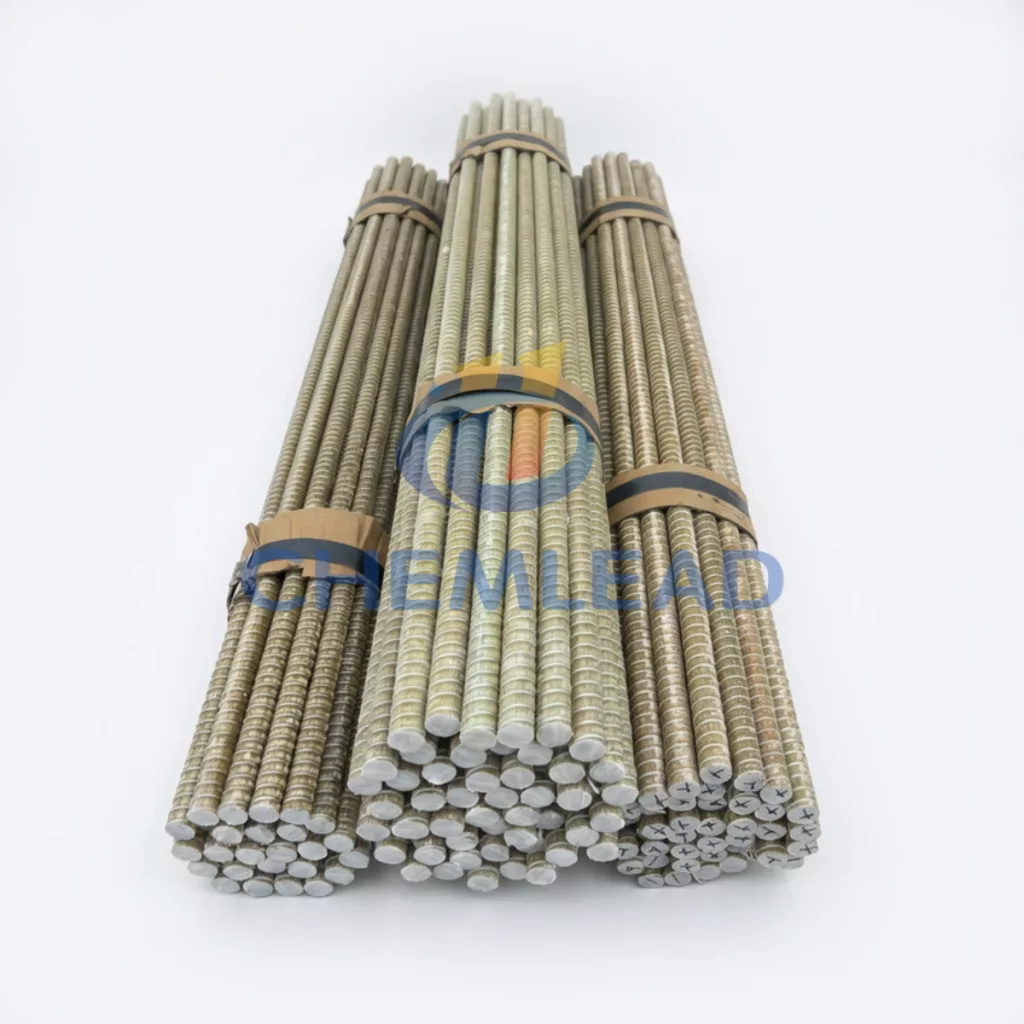
Steel rebar has long been the standard for concrete reinforcement—but its biggest weakness remains corrosion. In environments exposed to moisture, chlorides, or chemicals, steel begins to rust, leading to cracking, structural damage, and expensive maintenance.
To overcome these challenges, engineers and contractors worldwide are turning to Fiberglass Reinforced Polymer (FRP) Rebar—a high-performance, corrosion-free alternative designed for long-term durability.
What is Fiberglass Rebar?
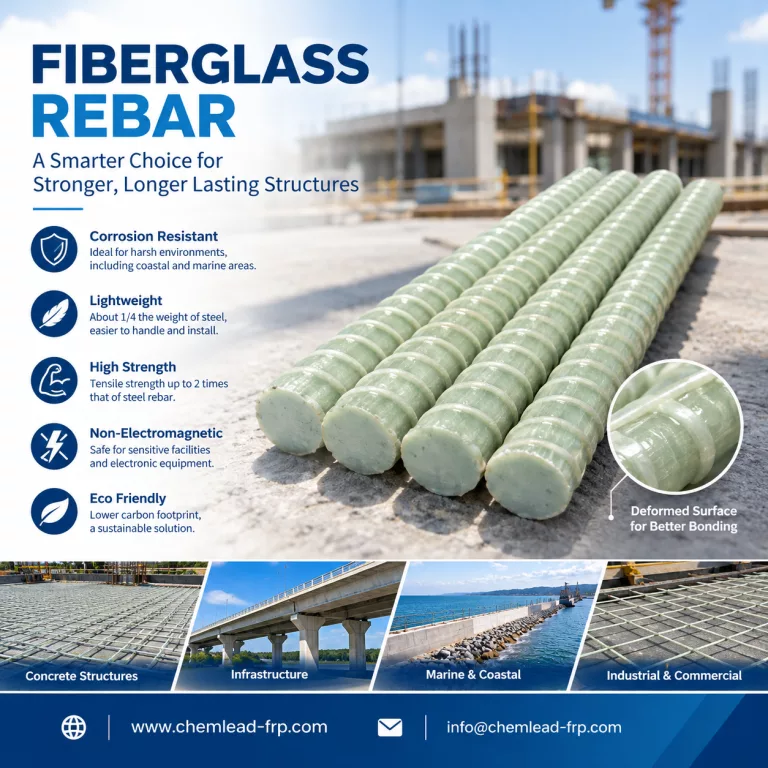
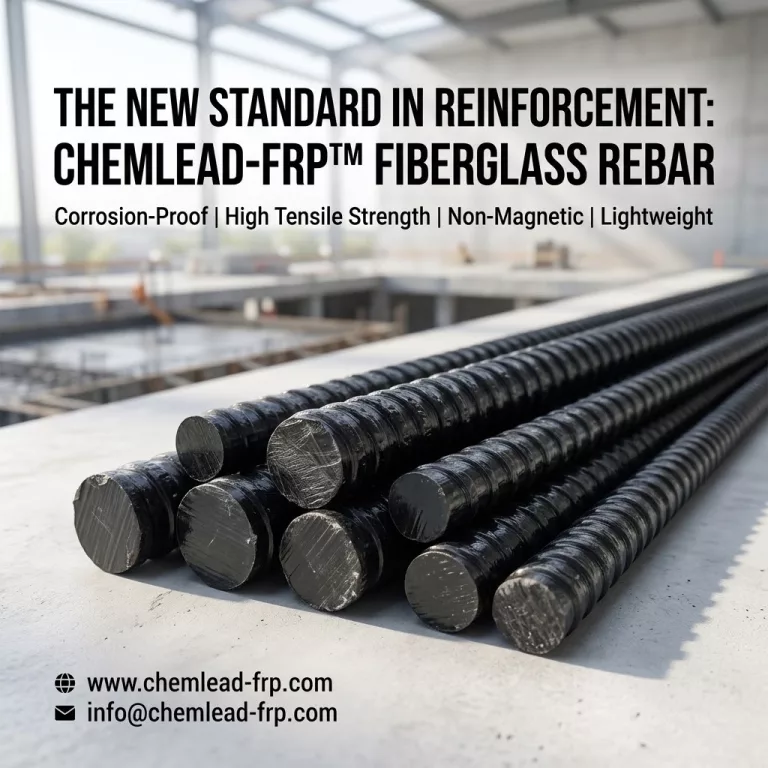
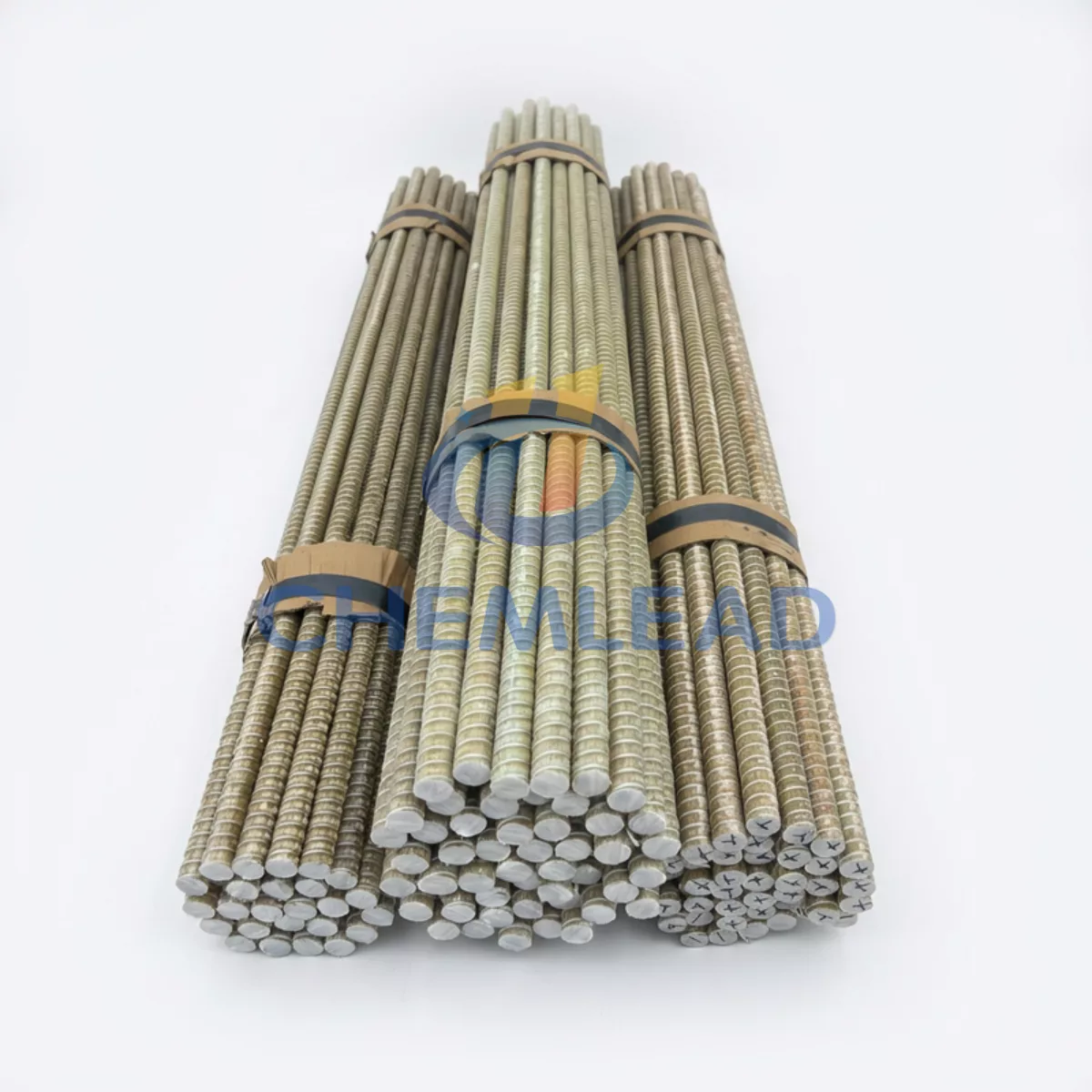
Fiberglass rebar, also known as GFRP rebar, is a composite material made from high-strength glass fibers embedded in a polymer resin matrix. It is specifically engineered to provide superior reinforcement without the risk of rust or degradation.
Unlike steel, FRP rebar maintains its integrity even in the harshest environments, making it ideal for infrastructure projects with demanding performance requirements.
Key Benefits of Fiberglass Rebar
🌊 1. 100% Corrosion-Resistant
FRP rebar does not rust, regardless of exposure to:
- Seawater
- De-icing salts
- Chemicals and industrial environments
This makes it the perfect solution for marine and coastal applications.
🪶 2. Lightweight & Easy Installation
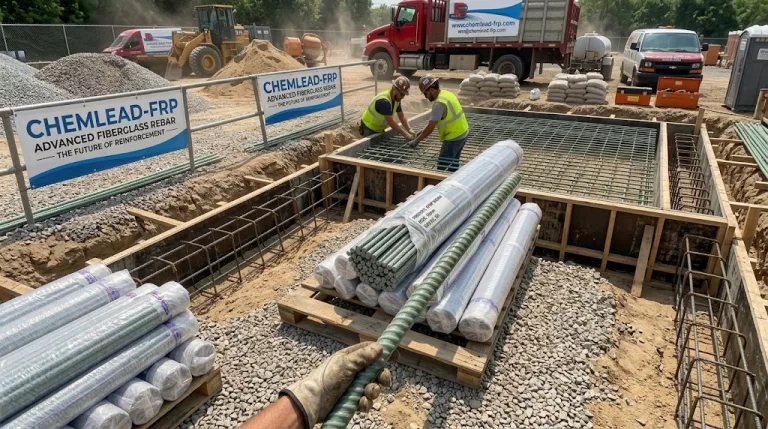
Fiberglass rebar is approximately 75% lighter than steel, offering:
- Lower transportation costs
- Faster installation
- Reduced labor intensity
Contractors can handle and install FRP rebar more efficiently, improving overall project timelines.
💪 3. High Tensile Strength
FRP rebar delivers higher tensile strength than steel, ensuring reliable structural performance in demanding applications such as bridges and highways.
⚡ 4. Non-Conductive & Non-Magnetic
Unlike steel, fiberglass rebar:
- Does not conduct electricity
- Does not interfere with electromagnetic fields
This makes it ideal for:
- Hospitals (MRI rooms)
- Power plants
- Rail transit systems
🔧 5. Long Service Life & Low Maintenance
With no corrosion, FRP rebar structures can last over 100 years with minimal maintenance—significantly reducing lifecycle costs.
Applications of Fiberglass Rebar
FRP rebar is widely used in projects where steel corrosion is a major concern:
- 🌉 Bridges and highways
- 🌊 Marine structures and seawalls
- 🛣️ Roads and pavements
- 🏭 Industrial plants and chemical facilities
- 🚇 Tunnels and underground infrastructure
- 🧱 Precast concrete elements
Fiberglass Rebar vs Steel Rebar
Feature | Fiberglass Rebar (FRP) | Steel Rebar |
|---|---|---|
Corrosion Resistance | 100% | Poor |
Weight | Lightweight | Heavy |
Tensile Strength | High | Moderate |
Conductivity | Non-conductive | Conductive |
Maintenance | Very Low | High |
Service Life | 100+ years | 20–30 years |
Why Choose Chemlead FRP Rebar?
At Chemlead, we specialize in manufacturing high-quality fiberglass rebar for global infrastructure projects. Our solutions are designed to meet international standards and deliver consistent performance in demanding environments.
We offer:
- Full range of diameters and specifications
- Stable quality and reliable supply
- Technical support for project applications
- Competitive pricing for international markets